Why You Should Hard-Pipe Your Natural Gas Grill
Thinking about hard-piping your natural gas grill? Learn why it’s safer, more reliable, and what to expect when a pro installs a proper gas line to your patio.
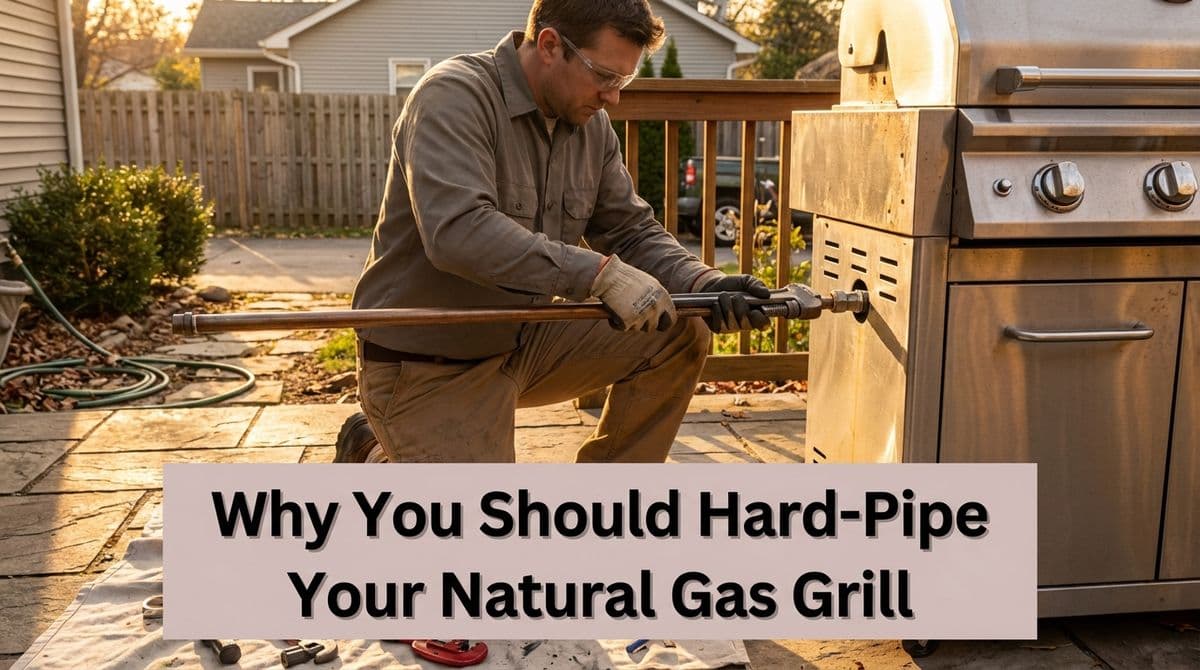
Why We Recommend Hard-Piping Your Natural Gas Grill
We recently got a call from a homeowner — let’s call him Mike — who had a question we hear a lot. A couple of years ago, when he moved into his home, he hooked his patio gas grill to the existing natural gas outlet using a long flexible hose he picked up at the store.
It “worked,” but not perfectly. Sometimes the grill was slow to light, the flame didn’t seem as strong, and he admitted the flex line was probably longer than it should be and snaked around the patio. Now he was ready to, in his words, “get that plumbed properly with hard pipe and etc., etc.”
That call is a great example of why we often recommend hard-piping a natural gas grill instead of relying on a random flex line. Let me walk you through what we explained to Mike: why it matters, what codes typically require, and what you can expect if you hire a licensed plumber to install it.
Flex Hose vs. Hard Pipe: What’s the Real Difference?
On Mike’s patio, there was already a natural gas outlet stubbed out of the wall. He had simply threaded on a flexible hose and run it to his grill. That’s a very common DIY setup — but it’s not always safe or code-compliant long-term.
Flexible gas connectors are designed for specific uses: usually short runs to a fixed appliance, within certain length and BTU limits, and they must be listed for outdoor use if they’re outside. Many “temporary” hoses homeowners buy aren’t rated for permanent outdoor exposure, heavy use, or being stepped on or rolled over.
Hard pipe (rigid gas piping) on the other hand is usually made from black iron or steel, properly sized, supported, and installed to carry gas from the house line to the grill connection point safely and reliably.
Some key advantages of hard-piping:
- Less pressure drop: Properly sized hard pipe helps prevent weak flames and slow starting, like Mike noticed.
- Better protection: Rigid pipe is less likely to be crushed, kinked, or damaged by furniture, pets, or foot traffic.
- Cleaner install: The line can be routed neatly along the wall or under the deck, instead of a long hose across the patio.
- Long-term solution: Approved for permanent installations, when done according to code.
Safety & Code Requirements for Natural Gas Grills
When Mike asked, “Is my current setup actually a problem?” our answer was, “It might be.” The only honest way to know is to inspect it on site, but there are typical safety and code items we always look for.
Common Requirements We Check
While local codes vary, here are some of the things your inspector or licensed plumber will usually verify:
- Shutoff valve: There must be a manual shutoff valve in an accessible location near the grill, usually upstream of any quick-connect fitting.
- Proper materials: Exterior gas piping typically must be black steel or approved material; not all flex hoses or connectors are allowed outdoors or for permanent use.
- Correct sizing: The line has to be sized for your grill’s BTU rating and the length of the run so you don’t lose pressure and performance.
- Secure support: Piping must be properly supported and protected from physical damage.
- Approved connection point: Most permanent installs end in a properly mounted gas outlet box or rigid stub-out with a listed quick-disconnect fitting for the grill.
If any of those items are missing or done incorrectly, it can mean gas leaks, poor performance, or failed inspections. That’s why we don’t just “swap a hose” — we evaluate the entire run from the existing gas system to the grill.
What to Expect When We Hard-Pipe Your Grill
During Mike’s call, we explained that we charge a small service fee to come out, look at his setup in person, and then give a firm price before we start. That’s because every home is a little different, but the general process is usually the same.
1. On-Site Evaluation & Options
When we arrive, here’s what we typically do:
- Verify your home’s gas supply and where the nearest tie-in point is.
- Check for an existing exterior gas stub or outlet and assess its condition.
- Look at the grill’s BTU rating and manufacturer’s connection requirements.
- Discuss where you want the grill to live permanently (or how much mobility you really need).
From there, we can lay out your options: the route for the hard pipe, whether a quick-disconnect is appropriate, and any code upgrades needed.
2. Running and Securing the Hard Pipe
Once you approve the work, we:
- Shut off the gas supply at the appropriate valve.
- Install new black steel (or approved) piping from the tie-in point to the patio or grill location.
- Support and secure the pipe along walls, under decks, or across framing where needed.
- Terminate at a rigid stub-out, outlet box, or mounting bracket designed for grill connections.
This step is where the “messy hose across the patio” turns into a clean, professional installation.
3. Proper Connection & Testing
At the end of the hard pipe, we’ll usually install:
- A shutoff valve in an accessible location.
- A quick-disconnect fitting or approved connector for your specific grill.
Then we turn the gas back on and perform a leak test on all joints and fittings. We also test-fire the grill with you there, checking flame quality and verifying it lights reliably.
Is Hard-Piping Worth It for You?
In Mike’s case, he was tired of slow starts, didn’t like tripping over the long hose, and wanted the peace of mind that everything was “done right.” If you’re in a similar situation, here are a few questions to ask yourself:
- Is your grill in a fairly permanent spot?
- Do you already have a natural gas stub or outlet nearby?
- Are you unsure whether your existing flex line is rated or installed correctly?
- Have you noticed weak flames, slow ignition, or inconsistent heat?
If you answered “yes” to a couple of those, it’s probably time to look at a proper hard-pipe installation. You’ll get better performance, a neater setup, and — most importantly — a safer gas system that’s installed to code.
If you’re thinking about upgrading your grill’s gas supply, we’re always happy to come out, take a look, and walk you through your options before any work begins.