Dishwasher Leaking but No Water? Plumber vs. Appliance Tech
Floor swelling in front of your dishwasher but no visible water? Learn how to spot hidden leaks, protect your floors, and know whether to call a plumber or an appliance tech.
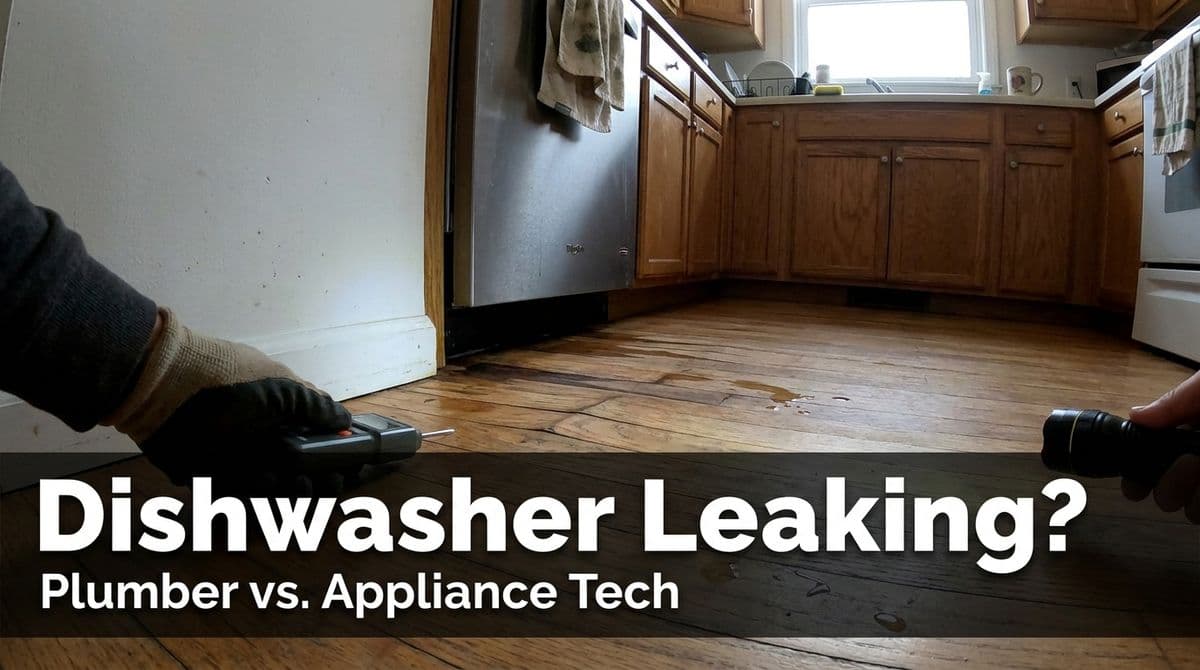
When Your Floor Swells but the Dishwasher Looks “Dry”
We recently got a call from a homeowner — let’s call her Linda — who was worried about her dishwasher. Every time she ran it, the wood flooring right in front of the dishwasher swelled up. No puddles, no obvious drips, just a slowly rising, soft spot in the floor.
On the phone, we walked through what she was seeing, how old the dishwasher was (around 8–10 years), and whether the swelling only happened when the dishwasher ran. From what she described, we told her what we’re about to tell you:
Hidden dishwasher leaks are very real, they can quietly destroy your floor and subfloor, and sometimes they’re a plumbing issue — but very often, they’re an appliance issue.
In this post, we’ll walk through the same guidance we shared with Linda: how to spot hidden leaks, how to protect your floors, and how to decide whether to call a plumber or an appliance repair tech.
Why Your Floor Can Swell Without Any Visible Water
Linda’s biggest question was, “If it’s leaking, why don’t I see any water?” That’s a fair question, and we hear it a lot.
Here’s what often happens with dishwashers:
- Water seeps under the flooring instead of out onto the surface.
- Tile grout, laminate, or vinyl seams let a little water pass through with each cycle.
- Wood, laminate, and some vinyl planks swell as they absorb moisture, so you see raised boards, not standing water.
- Subflooring soaks it up like a sponge, hiding the leak while the damage spreads outwards.
By the time you spot a hump or soft spot in front of the dishwasher, there’s a good chance the leak has been happening for a while.
Quick Checks You Can Do Before Calling Anyone
When we get a call like Linda’s, we usually walk through a few simple checks a homeowner can safely do. These don’t replace a professional visit, but they can help you narrow things down.
1. Confirm if the leak is tied to the dishwasher cycle
Ask yourself:
- Does the floor only feel soft or swollen after a cycle?
- Do you notice any musty smell or warmth in the swollen area after the dishwasher runs?
- Does the swelling seem to get worse over days or weeks of regular use?
If the symptoms show up or worsen specifically when the dishwasher runs, chances are high the issue is with the dishwasher or its connections.
2. Look inside and around the dishwasher
Without pulling anything apart, you can quickly check:
- Inside the tub: Any standing water after a cycle? That can indicate a drain issue.
- Door gasket: Look for cracks, tears, or mold along the rubber seal.
- Kick plate area: Remove the bottom front panel if you’re comfortable doing so and shine a flashlight in. Look for rust, water stains, or damp insulation.
If you see fresh dampness right after a cycle, take a picture or video — that’s helpful for whoever you call next.
3. Check nearby plumbing fixtures
In Linda’s case, there was also an outdoor faucet on the back side of the wall behind the dishwasher. If you have something similar, or if the dishwasher shares a wall with a bathroom or laundry, do a quick walk-around:
- Run the outdoor faucet or nearby sink without running the dishwasher. Any change in the swelling or visible moisture?
- Listen for running water sounds when all fixtures are off.
If the area gets wet or worse even when the dishwasher isn’t running, you may be dealing with a plumbing leak inside the wall, not just an appliance issue.
Plumber or Appliance Tech? How We Decide on the Phone
One of Linda’s biggest concerns was cost: she didn’t want to pay a service fee just to have us say, “This isn’t plumbing — call someone else.” We completely understand that, and we try to be upfront.
Here’s how we usually break it down over the phone, based on what you describe:
When it’s usually an appliance repair issue
We lean toward recommending an appliance repair tech when:
- The leak or floor swelling only happens while the dishwasher runs.
- The dishwasher is older (8–10+ years), like Linda’s.
- There’s no sign of leaking from other fixtures on the same wall.
- You see moisture under the unit or around the door after a cycle.
In those situations, the problem is more likely a dishwasher pump, internal hose, tub, or door seal. That’s inside the appliance — something an appliance tech is set up to handle more cost-effectively than a licensed plumber.
When it’s usually a plumbing issue
We recommend calling a plumber (us or another licensed company) when you notice:
- Signs of moisture even when the dishwasher isn’t running.
- Wet spots or damage on the wall behind or beside the dishwasher.
- Multiple fixtures in the area acting strange: low pressure, slow drains, gurgling, or backups.
- Water meter spinning or higher water bills when no fixtures are in use.
Those clues point to issues like a leaking supply line, valve, drain pipe, or even a slab (foundation) leak under the kitchen. That’s squarely in plumbing territory.
What Our Visit Typically Looks Like
For Linda, we explained how our service call works, and it’s the same for you: we charge a small flat fee to come out, look things over, and determine whether the problem is plumbing-related.
On a typical dishwasher-leak visit, we will:
- Visually inspect around and under the dishwasher as much as accessible.
- Check the shut-off valve, supply line, and drain connection under the sink.
- Run the dishwasher while watching the plumbing connections.
- Look for signs of slab or in-wall leaks if the symptoms point that way.
If we find that the leak is from the dishwasher itself (not the lines or drain), we’ll tell you honestly and recommend calling an appliance tech or considering replacement — especially for older units.
Protecting Your Floors While You Sort It Out
Hidden leaks can turn into major flooring and subfloor repairs if they go unchecked. While you’re scheduling a professional, there are a few things you can do to limit damage:
- Pause regular use. If you strongly suspect a leak, avoid running the dishwasher until someone can look at it.
- Use towels or a tray. If you must run a cycle, place an absorbent towel or low tray in front of the unit and check it immediately afterward.
- Ventilate the area. Run a fan toward the swollen area to help dry surface moisture and reduce mold risk.
- Document everything. Take photos and short videos of the swelling and any dampness after runs.
These steps won’t fix the leak, but they can reduce how far the damage spreads before the underlying issue is addressed.
Will Insurance Help With a Hidden Dishwasher Leak?
We’re not insurance adjusters, but we’ve seen a lot of homeowners go through this. Many policies will not cover the cost of repairing or replacing the dishwasher itself, but they may help with:
- Water-damaged flooring or subfloor
- Baseboards, cabinets, and drywall repairs
- Professional drying or mold remediation, if needed
If your floor is already swelling like Linda’s, it can be worth calling your agent to ask:
- Is gradual leak damage from an appliance covered?
- Do you require photos or a plumber’s/appliance tech’s report?
- Do you need to approve mitigation work before it begins?
The key is to act quickly — most policies require you to take reasonable steps to limit damage once you notice a problem.
When In Doubt, Start With a Conversation
With Linda, we were very clear: we’re happy to come out, but we also don’t want her paying a plumber for something an appliance tech could handle more affordably. We try to have that same honest conversation with every caller.
If your dishwasher seems to be “leaking without leaking” and your floor is starting to swell, don’t ignore it. Even if you’re not sure whether you need a plumber or an appliance repair pro, reach out and describe exactly what you’re seeing. We’ll ask you a few focused questions — just like we did with Linda — and help you decide on the best next step to protect your home and your wallet.